This week’s task was to watch the documentary ‘A Time for Making’ by Philip Vannini and answer the following questions:
1. What drives makers to make?
2. Which of the makers in the documentary resonated most with you? Why?
3. How do makers describe their connection between materials and making?
4. What are the relationships between design and making?
1. What drives makers to make?
The documentary shows that makers are driven by creativity, passion, independence, community and a connection to place, rather than simply financial success. One maker explains that they are “fuelled by creativity, not fuelled by money.”
Making also gives the makers a particular lifestyle and sense of fulfilment. The baker describes this by saying, “I earn a lifestyle, not a living.” This suggests that making is not just employment; it is integrated into how these people choose to live.
The documentary also highlights the importance of community. Makers support, teach and exchange ideas with each other, creating a culture where creativity is shared rather than competitive.
2. Which of the makers in the documentary resonated most with you? Why?
The Boatbuilder / Woodworker resonated with me the most because he combines function, craftsmanship and artistic expression. He describes boatbuilding as:
“a three-dimensional sculpture, a functional piece of sculpture.”
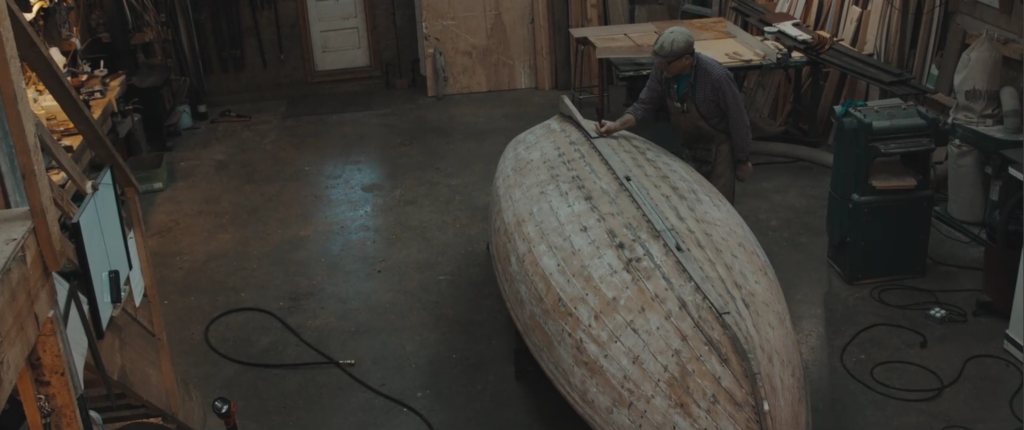
I find this interesting because it challenges the idea that functional objects cannot also be artworks. His boats need to work structurally, but he also considers their shape, proportions and visual qualities.
His experience of physically working with wood also influences how he designs. He explains that he can recognise when the lines of a boat are slightly distorted because of his practical experience.
This connects with Yair, Tomes, and Press’s (1999) concept of “design through making,” where practical craft knowledge contributes directly to the design process. For me, the boatbuilder demonstrates that design can develop through physically making and understanding a material, rather than being completely planned beforehand.
3. How do makers describe their connection between materials and making?
The documentary shows that makers have a physical and personal relationship with their materials. They learn through touching, shaping and working with materials rather than simply following a predetermined design.
The documentary explains:
“It connects the maker with the material… there’s an actual physical connection between the maker and the material.”
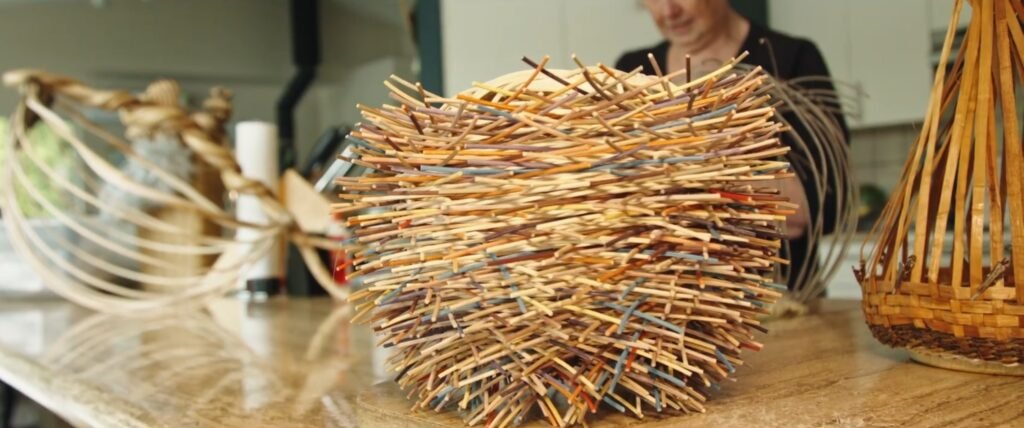
The basket maker demonstrates this by saying:
“A lot of baskets have a mind of their own.”
This shows that the material can influence the final design. Instead of completely controlling the material, the maker responds to its shape, flexibility and natural qualities.
Similarly, the guitar maker considers how wood looks, feels and sounds, describing his focus on “how it sounds and how it feels, and how it smells.”
This relates to Aktas and Mäkelä’s (2019) idea of making as a negotiation between the maker and material, where knowledge develops through physical interaction.
Overall, the makers show that materials are not simply chosen for a design; they actively help shape the design itself.
4. What are the relationships between design and making?
The documentary shows that design and making are closely connected rather than separate stages. Makers often develop their designs through experimentation, testing and responding to materials.
The basket maker explains:
“You have an idea and you do it, and if it works, it works, if it doesn’t, you do something else.”
This demonstrates iterative process of design, where the act of making helps generate and refine ideas.
The boatbuilder demonstrates the same relationship by combining structural knowledge with artistic decisions. His description of the boat as a “three-dimensional sculpture” shows how function, material and aesthetics can come together through making.
Overall, the documentary suggests that making is itself a form of design thinking. Materials, tools, experience and experimentation all contribute to the final form.
References
Aktas, Bilge, and Maarit Mäkelä. 2019. “Negotiation between the Maker and Material: Observations on Material Interactions in Felting Studio.” International Journal of Design 13 (2): 55–67.
Yair, Karen, Anne Tomes, and Mike Press. 1999. “Design through Making: Crafts Knowledge as Facilitator to Collaborative New Product Development.” Design Studies 20 (6): 495–515.